
A lot of people are talking about Random House's attempt to claim they have electronic rights on all of the books in their back list.
Their argument seems odd considering they already lost the battle over five years ago; travel back in time to 2001 when Rosetta Books decided it was going to publish electronic works from several authors; the argument was the same--Random House did not control electronic rights because it wasn't in the contract. The courts sided with Rosetta Books.
Authors, by and large, aren't upset because they don't want their books published electronically (though some are); they're upset that they are getting the same cut that they would on traditional books even though publishing a book electronically cost next to nothing.
Showing posts with label kindle. Show all posts
Showing posts with label kindle. Show all posts
Tuesday, December 15, 2009


Monday, November 30, 2009
Writing in the Digital Age
I finally got around to uploading the photos from my writing presentation at the Tustin Branch library last October; you can see them below. If you missed the lecture, I converted my notes into a book that you can download on Kindle (hopefully also on Nook soon). You can read a sample or buy it here.




"Writing in a Digital World." Read it on Kindle now!

Why do men have Nipples?


With Chase from The Drift. Read his stuff here.
Monday, November 23, 2009
Observations on a Life Not Yet Observed
Over the past two years since "Quiet, Please," I was engaged in several writing projects; many of these projects had me sketching out humor essays that eventually would be used for chapters in different books--some of the essays went on to be published, and others did not. They were all good, and so I have collected them (along with several others) into a collection of humor essays titled "Observations of a Life Not Yet Observed."
Essay collections are not an easy thing to publish; I hope one day that they do find their way into a bound book, but for now I am making them available on Kindle (which you can now also read on your PC and iPod). You can buy a copy here.
There are stories about being broke, stories about being newly married, and stories about being purposely electrocuted by my grandfather (it really is funny!).
Over the next couple weeks, I'll be writing about a few more projects I have on Kindle, so stay tuned.
Tomorrow and the day after, I'll post the first two essays from the collection for your reading entertainment.


Essay collections are not an easy thing to publish; I hope one day that they do find their way into a bound book, but for now I am making them available on Kindle (which you can now also read on your PC and iPod). You can buy a copy here.
There are stories about being broke, stories about being newly married, and stories about being purposely electrocuted by my grandfather (it really is funny!).
Over the next couple weeks, I'll be writing about a few more projects I have on Kindle, so stay tuned.
Tomorrow and the day after, I'll post the first two essays from the collection for your reading entertainment.

"Observations on a Life Not Yet Observed" (and no, that's not me on the cover).
ALSO AVAILABLE:

"Christian Obscenity" A collection of Christian humor, parody, interviews, and other essays I've published over the years.

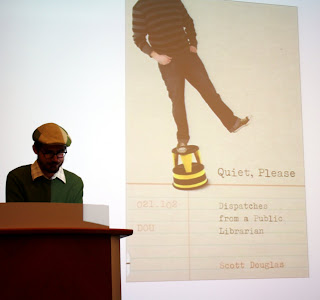
"Dispatches from a Public Librarian" which is made up of my library dispatches from McSweeney's and a couple of library related essays and stories.

"The First Cyber Death Extravaganza!" a humorous post-modern mythology about the Internet that I wrote a few years back

"The Library Tree" another humorous mythology (this one for kids) that I wrote a few years ago.

"Interviews with Famous People I've Never Meant" is comprised of the interviews in "Christian Obscenity" but it's cheaper and without all the essays/stories
Tuesday, October 20, 2009
No Kindle Killer...Yet
I'm impressed with the new B&N Reader, the Nook, but I'm not ready to call it a Kindle killer. Here's my rationale:
*It's not international; I still like books, but eBooks are great for the road...as long as you're not going overseas where the Nook isn't available (except through wi-fi)
*Wi-Fi (on the Nook, but not the Kindle 2) is impressive, but not really neccessary when there's no built in web browser.
*There's no built in Web browswer! This is one of the places Amazon still beats them; it's so simple to be reading about a place on Kindle and look it up on Wikipedia right from the book.
*Kindle has 2 years behind it's brand--Barnes and Noble is returning to the game after completely abandoning people! I hope they don't leave again after that 300 dollar investment!
*Is lending books 14 really that impressive? And is there a limit? On Kindle you can only download a book 5 times before your blocked...it's really lame.
Honestly, I think both devices are still overpriced. I'm more excited about the Asus. But it's good to see someone new on the market to challenge Amazon.
*It's not international; I still like books, but eBooks are great for the road...as long as you're not going overseas where the Nook isn't available (except through wi-fi)
*Wi-Fi (on the Nook, but not the Kindle 2) is impressive, but not really neccessary when there's no built in web browser.
*There's no built in Web browswer! This is one of the places Amazon still beats them; it's so simple to be reading about a place on Kindle and look it up on Wikipedia right from the book.
*Kindle has 2 years behind it's brand--Barnes and Noble is returning to the game after completely abandoning people! I hope they don't leave again after that 300 dollar investment!
*Is lending books 14 really that impressive? And is there a limit? On Kindle you can only download a book 5 times before your blocked...it's really lame.
Honestly, I think both devices are still overpriced. I'm more excited about the Asus. But it's good to see someone new on the market to challenge Amazon.
Wednesday, October 7, 2009
Ten Ways Publishing Can Be Saved
I suppose last week NY Times article was supposed to be shocking eye opener; perhaps to some it was, but I found the piece to be yet another reason that the publishing industry is heading down a path it will find it hard to recover from.
The article ended with a representative of one of the file sharing websites concluding that the publishing industry should be like the band "Nine Inch Nails" and just give away most there stuff for free, and the author concludes that this is just absurd because authors can't pack arenas and make money with this kind of model.
The attitude that publishing can't give away things for free is yet another example of the arrogance in the industry. Instead of figuring out a way to make it work, many publishers are either trying to threaten file sharing websites with letters from their lawyers (which didn't work for the music industry and won't work for the publishing industry either) or tossing up their hands like it's a lost cause.
Instead having legal waste their time combing the Internet trying to find every single book illegally posted, they should be spending money on young marketers who might actually find a free-based model that would work.
Below are a ten relatively simple ways publishers can make money off electronic publishing:
1. Subscription Model - Most publishers have literally thousands of books that they own the rights too; why not start a subscription service--20 bucks a month let's you read any book in the Random House catalog. If they really want to do it right, they could partner with other publishers to offer even more books.
2. Create Phone Apps – more and more people are reading on their phones; experiment with a phone app that once again takes out the middleman—something that lets the reader buy and sample a book directly from the publisher and read it on their phone. Make the app and samples free—many readers would probably buy physical copies if they had a chance to read a sample on subway on their way home from the office. On that note, experiment with publishing serial books--$0.50 for a book that publishes a new chapter each week—or a subscription to have the book automatically downloaded each week to your phone.
3. Advertising - Quite simply this means put ads in books (which I've talked about here)
4. Product Placement - Those who have read early drafts of my YA book know that the PS3 plays a sizable role; there is absolutely no reason why the PS3 can't be Xbox 360 or Wii; a publisher could probably do pretty well by taking ideas like this to corporations. Obviously, not every author is going to go for this, but I suspect many would if they were making percentages off the deal.
5. More Rights - I am not a fan of this, but I understand that it will likely come--new (and unproven authors) will likely have to give up more rights to their books (like translation and media). It's no secret that nearly half (sometimes more) of an authors income come from selling the rights of their book to other countries; if the rights are also sold to a film studio, a few more thousand are coming the authors way. As pirating becomes more popular, publishers are likely going to start taking some of these rights to make back money (some already do it). That's not all bad; they'll likely have more muscle to get the book translated into more language, which will make the author more in the long run.
6. Tours – The article mentions that authors can’t sell out arenas—why not? It’s true that even big authors wouldn’t be able to pull this off, but publishers have more than one author. Why not arrange a tour with several authors instead of one? Send two dozen authors off together on a college tour; don’t make it a tour—make it a festival. Have the authors perform lectures and readings as well as writing workshops and individualized writing coaching sessions. I guarantee that younger writers wouldn’t mind slumming it on buses (and even dorm room floors) if it meant getting their work out. To get even more exposure, they could partner up with Indie rock bands who are also doing campus tours. Authors could also do live videos from the festivals for people who can’t make it out—videos that show more than a boring reading; people are interested by voyeurism—the videos should be more of a diary of what it’s like to be on a tour. Having authors actually visit classrooms is going to make the students feel closer, and they’ll be more likely to buy their work and support them than download it free. To help get money, get a company like Target to sponsor it. If the tour gained enough exposure then companies would pay good money to have their logo slapped on a bus that was sitting in a college campus parking lot.
7. Build better websites – I’m not even talking about the websites of their authors; I’m talking about better websites for the publisher; I’ve never been to a publishers website that was more than just a catalog of the books they publish; it needs to be more interactive—there should be things that get visitors returning. How can publishers encourage authors to build good websites when they themselves aren’t doing this?
8. NO DRM – Demand that Amazon remove DRM; it will do you more good in the long run. Sharing can be a good thing if you do it right. Publishers could even sell DRM-Free books on their websites and make a killing because they wouldn’t have to pay the digital bookstore.
9. Lower Prices – If it’s a new writer, then don’t make people pay ten bucks for the book; likewise don’t sell experienced writers for fifteen bucks—ten is the most anyone should to pay for a digital book.
10. Preload eBooks readers – Sell eBook preloaded with eBooks. 400 bucks is a lot, but it’s not quite as bad if it has 100 bucks load on it for free.
Instead of waiting for people from places like Amazon to approach them with ideas for this, they need to be going to Amazon. Their role thus far has been relatively passive; it’s time for that to change. Last week a company said they would make reading more interactive by putting movies in the text, and all I could think was that’s really the best they can do? Hollywood
I don't think it's entirely unlikely for authors to start get patrons to pay them for their work; this is how authors used to make a living. If an author got a big enough following by giving away their books for free, they might eventually get a wealthy fan (or smaller press) that paid them to continue writing. Geoffrey Chaucer made a living as a writer in this way, so did Charles Bukowski, and so have hundreds of other writers.
Those are just a few ways to make publishing digitally successful, but if publisher stop wondering what to do when pirating comes, and start realizing that it's already here then hopefully they'll be able to think up a few more that might actually save them.
Thursday, September 10, 2009
The First Cyber Death
Ten some odd years ago, while studying writing as an undergraduate, I wrote a 40,000 word story about a man who wanted to be the first person to kill himself on the Internet.
It's been through a lot of revision over the years, but nothing major for quite sometime. At one point I tried to publish it, but it was rejected for being too ambitious, too weird, too shocking, too experimental...the list goes on and on.
Perhaps it was too shocking to ever see the light of day, but the beauty of Kindle is you can be your own publisher. I put the text online here (you can read the entire synopsis there too) for $1.00 if you want to read it and have either a Kindle or iPhone.
It's been through a lot of revision over the years, but nothing major for quite sometime. At one point I tried to publish it, but it was rejected for being too ambitious, too weird, too shocking, too experimental...the list goes on and on.
Perhaps it was too shocking to ever see the light of day, but the beauty of Kindle is you can be your own publisher. I put the text online here (you can read the entire synopsis there too) for $1.00 if you want to read it and have either a Kindle or iPhone.
Those who don't have a Kindle can also order a physical copy by clicking on the PayPal link below (it's only $10.00); Amazon has a incredibly cheap vanity press (you pay to print a proof copy, which is about 10 bucks) called CreateSpace that makes it easy to publish works that might now be published elsewhere.
The book is a bit dated with it's pop culture references (keep in mind it was written ten years ago), but I still think the idea is pretty fresh...if nothing else, I guarantee it will be one of the weirdest things you have ever read.
If you want to have the book for free, then buy $20 bucks of stuff from my wife's Esty store, and I'll have it send it to you for free! Just make sure you let one of us know via email that you want a copy, and we'll send it out!
Say what you want about eBooks, but one of the nice things I see about them is they are helping bring about the return of the short novel; if you think selling a 100,000 word novel is hard, try selling a 40,000. On Kindle, however, anything goes--a scenario that's both good and bad, but one that can ultimately work in the authors favor.


Tuesday, September 8, 2009
The Next Victim of Kindle’s Big Brother
I’ve spent the summer finishing up a YA book that my agent will, with any luck, be able to sell after I finish up the third and final draft. I’m sure I’ll have more to say about it later, but for the sake of taking a break from the wonderful world of revision, I thought I’d take the time to write a blog about something very curious that I’ve seen happening in the Kindle store.
By now everyone is probably familiar with the big Kindle hiccup that happened at the start of the summer with George Orwell’s 1984. It wasn’t all that odd since the book was still in copyright. In the past couple weeks, Amazon started doing something that is a bit odd: pulling public domain books from the self.
Public domain books by Mark Twain, Willa Cather, Jack London, Aldous Huxley, and literally hundreds of other popular public domain books mysteriously vanished at the end of August.
Yesterday, Amazon announced that it will begin removing all duplicate Public Domain titles, which at least solves the question of the disappearing eBooks.
People who have Kindles are probably aware that publishers by the thousands have uploaded works that are in public domain and sold them for profit. Most of these titles are likely just books that people took off Project Gutenberg and reformatted for Kindle.
They claim the reason for the new policy is to make things less confusing for the consumer because there are too many copies of one work by different publishers. I don’t think it’s confusing at all, which is why I think there’s something else behind it.
My guess is there’s going to be some bigger announcement by Amazon regarding public domain by the end of the year. Which begs the question: what happens if I want to re-download a book that was removed because of this new policy? And further isn't this make a little bit too much of a monopoly for the company? Publishers big and small have successfully republished public domain works with new covers and different authors providing introductions for the past hundred years. A larger percentage of the publishing industry is made up of this kind of practice. For Amazon to say that they will only let one publisher sell something like Huck Finn seems a little odd, and frankly illegal to me.
Thursday, May 21, 2009
The Kindle Killer
A few days ago, a thought occurred to me: I haven't used my Kindle in quite awhile. It's not because I have already grown tired of eBooks; it's because I recently bought an iPod Touch, and find the experience to be a bit more agreeable than the the Kindle in most settings.
The text on the Touch is clear and does not tire my eyes, can be read outdoors, and is easy (and light) to keep in your pocket. I now find myself reading everywhere I go--the movies, waiting rooms, etc. One of the biggest problems I have with the Kindle is the lack of back light; this makes reading in low lit places (like movie theaters) impossible without bring a light with you. With the newest Kindle app update, the software just got better (it now rotates text and let's you have different text colors)
The Kindle is still a great device (it has better lighting and it is a bit easier to read outdoors), but the Touch has proven to be the perfect companion. The great thing about Kindle is you can have the both worlds--since Amazon stores all your books online it's incredibly easy to download your books on both devices.
If you'd like to try out eBooks, the Touch is the perfect starter device; it's pretty cheap considering how powerful it is (it runs all the iPhone apps, can surf the net, play videos (both videos you have bought and videos you want to stream from places like youtube), and view pictures). Refurbished you can get one for less than $200.


The text on the Touch is clear and does not tire my eyes, can be read outdoors, and is easy (and light) to keep in your pocket. I now find myself reading everywhere I go--the movies, waiting rooms, etc. One of the biggest problems I have with the Kindle is the lack of back light; this makes reading in low lit places (like movie theaters) impossible without bring a light with you. With the newest Kindle app update, the software just got better (it now rotates text and let's you have different text colors)
The Kindle is still a great device (it has better lighting and it is a bit easier to read outdoors), but the Touch has proven to be the perfect companion. The great thing about Kindle is you can have the both worlds--since Amazon stores all your books online it's incredibly easy to download your books on both devices.
If you'd like to try out eBooks, the Touch is the perfect starter device; it's pretty cheap considering how powerful it is (it runs all the iPhone apps, can surf the net, play videos (both videos you have bought and videos you want to stream from places like youtube), and view pictures). Refurbished you can get one for less than $200.


Wednesday, May 6, 2009
Kindle, A Good Idea Wasted
So, if you haven't been following, there's a new Kindle coming to town. I cannot begin to even tell you how disappointed I am in this new reader. $359 is a lot of money, but the price you pay for having cutting edge technology...$489 (the price of the new Kindle DX) is complete uncalled for; especially if they are calling it the Kindle that every college student will want, because it will save them money.
They are "probably" right about the saving money thing if you account for long term; many publishers haven't put textbooks on Kindle, but that will probably change come Fall if Amazon holds up their end of the bargain. The problem, of course, is it will take between two to three years before a college student has actually "saved" money. By that time, it's very likely that the screen on the Kindle has broken, or there's something much better on the market.
Realistically, college kids don't have $500 dollars to put down on something that won't actually save them money for two to three years, and parents aren't going to see this of much of an investment because it's just too new. As far as textbook e-readers go, the rumored $200 touchscreen Android netbook seems like a better solution, because in addition to reading books, you can get applications. If I was going to blow $500 for a e-reader, I would hold out for the rumored Apple tablet, which is expected to be just a little more (and, I'm willing to bet, will be capable of running the Kindle application like the iPhone and iPod Touch).
Sure, it's nice that the Kindle can now read PDF's; and that rotating screen is a pretty nifty feature that is sure to make all your friends say "cool," but that's not enough to get me to pay over $100 more. I was actually expecting a price drop, not a price hike--I guess they just assume that if you enjoy reading then your not one of those poor saps out of work, because your smart enough to keep your job during the economic crisis?
What does the Kindle need to win me over (in five easy steps)?
First, drop the price. $200 is more realistic. I read that it cost about $190 for Amazon to make a Kindle, but the hardware isn't where their profit is--it's the books. They are making a pretty penny selling things that cost basically no money to produce, sell or ship.
Second, give it a touchscreen! You want college kids to use this like they would a textbook? Students highlight textbooks! Sure you can use the highlight/bookmark feature, but that's hardly interactive or easy to do.
Third, make the experimental features REAL! A functional Web browser shouldn't be "experimental." It should be a real, fully operational feature that sits on the home screen...not tucked away in a less visited place. The same can be said of the MP3 feature, which is really quite lousy--you can't even browse songs, for crying out loud! You'd get a better MP3 player off some street vendor.
Fourth, give it a light. I'll be honest, I tend to use my iPod Touch more than my Kindle when I'm reading in bed. How hard is it to put a little back light on it? The iPod Touch is so much more piratical for night time reading.
Fifth, again, get the price down. If they can't do this by dropping the price then find other ways. Like users get $200 if they subscribed to the NY Times or WSJ for a year or two; or initiate a Kindle loyalty program that let's Kindle first and second generation users turn in their old Kindles for an upgrade at a reduced price.
I love the idea behind Kindle--I love my first generation Kindle. I just hate the price.


They are "probably" right about the saving money thing if you account for long term; many publishers haven't put textbooks on Kindle, but that will probably change come Fall if Amazon holds up their end of the bargain. The problem, of course, is it will take between two to three years before a college student has actually "saved" money. By that time, it's very likely that the screen on the Kindle has broken, or there's something much better on the market.
Realistically, college kids don't have $500 dollars to put down on something that won't actually save them money for two to three years, and parents aren't going to see this of much of an investment because it's just too new. As far as textbook e-readers go, the rumored $200 touchscreen Android netbook seems like a better solution, because in addition to reading books, you can get applications. If I was going to blow $500 for a e-reader, I would hold out for the rumored Apple tablet, which is expected to be just a little more (and, I'm willing to bet, will be capable of running the Kindle application like the iPhone and iPod Touch).
Sure, it's nice that the Kindle can now read PDF's; and that rotating screen is a pretty nifty feature that is sure to make all your friends say "cool," but that's not enough to get me to pay over $100 more. I was actually expecting a price drop, not a price hike--I guess they just assume that if you enjoy reading then your not one of those poor saps out of work, because your smart enough to keep your job during the economic crisis?
What does the Kindle need to win me over (in five easy steps)?
First, drop the price. $200 is more realistic. I read that it cost about $190 for Amazon to make a Kindle, but the hardware isn't where their profit is--it's the books. They are making a pretty penny selling things that cost basically no money to produce, sell or ship.
Second, give it a touchscreen! You want college kids to use this like they would a textbook? Students highlight textbooks! Sure you can use the highlight/bookmark feature, but that's hardly interactive or easy to do.
Third, make the experimental features REAL! A functional Web browser shouldn't be "experimental." It should be a real, fully operational feature that sits on the home screen...not tucked away in a less visited place. The same can be said of the MP3 feature, which is really quite lousy--you can't even browse songs, for crying out loud! You'd get a better MP3 player off some street vendor.
Fourth, give it a light. I'll be honest, I tend to use my iPod Touch more than my Kindle when I'm reading in bed. How hard is it to put a little back light on it? The iPod Touch is so much more piratical for night time reading.
Fifth, again, get the price down. If they can't do this by dropping the price then find other ways. Like users get $200 if they subscribed to the NY Times or WSJ for a year or two; or initiate a Kindle loyalty program that let's Kindle first and second generation users turn in their old Kindles for an upgrade at a reduced price.
I love the idea behind Kindle--I love my first generation Kindle. I just hate the price.


Saturday, May 2, 2009
999 Boycott
I found out today that Quiet, Please is one of the books listed on the 999 boycott! Who knew?! For those of you who don't know about the boycott, it was started because of a bunch of readers getting mad at bestsellers selling for 15 bucks on Kindle; the whole point of Kindle is you save the publisher money by not having to waste money on paper, and passing on the savings to you. At 15 bucks you could just as well go to Border or Barnes and Noble (heck even Amazon!) and buy a copy of the book since bestsellers are typically priced well below the retail cost ($25 to $30)
I don't exactly fit into the 999 club sense I am not the author of a bestselling book, but it's still nice to be included in something!
From an authors point of view, I do wish my book was 9.99; it's a better price point and I think it would grab a few more readers. And why shouldn't it be cheaper? You don't have to market an ebook, you don't have to pay anything to print--really all you have to do is do a bit of formatting changes to the book and upload it.
Monday, March 23, 2009


Monday, March 16, 2009
Quiet, Please For Kindle
Quiet, Please has at last found it's way onto Kindle. I've been hearing about people boycotting books that are over $9.99...sadly, my book falls into the above $9.99 price. At $15 it's still cheaper than the hardback.
I wish I had more say in how the book is formatted...I would have rewrote it for Kindle because footnotes on that device can be frustrating, and text box's just do not fit.
I also had to buy a copy of my own book to have it on my Kindle, which I think is absolutely ridiculous. Authors usually get ten to twenty free copies of any editions, but I guess this doesn't apply to electronic.
Tuesday, February 17, 2009
Stealing a Book Might Help the eBook Cause
The Guardian had in interesting article on why eBooks aren’t as big as they should be; they explained that their belief (and mine too), is there aren’t enough pirates taking interest.
I’ve heard people talking about torrent sites that are plentiful of eBooks, but they are wrong. Yes, you can get a copy of Twilight…Harry Potter is there too. It’s not what’s there that surprises me—it’s what’s not. Try and find a copy of some other bestselling authors—try John Grisham…nothing. Try someone classic…chances are nothing (although admittedly the Catcher in the Rye (which is on Kindle, and won't be until Salinger is dead or suddenly has a change of heard about publishing) is pretty easy to get.
EBooks, I would think, would be the easiest thing to find because they don’t take up any space; someone could create an anonymous Google Account, post the whole darn thing to Google’s document viewer, and it would be completely untraceable if they did it right. It probably would take a publisher months before they realized someone had done it, and then sent a letter to Google for them to take it down.
What’s even more surprising to me is Kindle has been out for quite some time, but no one has created a program that converts a Kindle protected eBook into an unencrypted Word (or text) document. Without something like this, then pirating eBooks is obviously never going to be very big.
Publishers are in a truly blessed position right now, because they really don’t have to deal with piracy in the same way as the music and movie industry. I don’t think that will last, and the Guardian makes a good point—they are going to soon be awaken to a sleeping giant that they are completely unprepared to fight.
Yes there are books on torrents, but if you browse through them you’ll quickly see that they are usually non-fiction business books—some probably uploaded by the authors. Most the time if you find a way to get an eBook for free, it’s probably because it was part of a promotion. Go ahead, look; go to Mininova (one of the largest torrent sites) and browse through their recent eBook entries; wheras movie entries has stuff currently showing at your local cinema, eBooks has a bunch of porn, a few technical books (not surprising since technical books are quite popular with pirates), and that's about it.
I’m not advocating someone create software that makes pirating eBooks easier (nor am I advoccating you download books illegally--authors really do need money...they're the poorest of all artist!)—I’m just surprised it hasn’t been done yet. If you can unencrypt 60 some odd gigs of video from a blu-ray disc (which has so many layers of encryption it’s ridiculous), how hard can it be to unencrypt a book that’s not even a megabyte?
Several years ago, a friend told me that he would have no problem paying for music if there was an easy, legal, way to do it; at the time MP3 players were just catching on (it was pre-iPod), and the easiest way to get a MP3 file was to download it on Napster (or if you were a true pirate, Usenet). How long is it going to be until Kindles and eBook readers (or even cell phones as eBooks) do catch on, and people start saying, “I’d buy that eBook legally if I could.” The sad thing about my friend was he was so used to doing it illegally that now that there is an easy legal way of doing it, he still doesn't bother--he did it so long the guilt was removed, I guess!
Amazon proudly boasts that almost every single bestseller is available on Kindle; that’s nice. What would be nicer is if they could boast the same about their backlist. I would guess that 50% of the 240,000 some odd books that’s on Kindle is public domain fiction that can be gotten free anywhere else. Not in that group of 240,000 are way too many other books? Is it so hard to put Flannery O’Connor on Kindle? How about Thomas Pynchon? David Foster Wallace? Heck what about Harry Potter? If Kindles so big they can’t get Harry Potter? And how about Michael Crichton? Thanks for giving us a Kindle version of The Lost World (sequel to Jurassic Park), but where’s Jurassic Park? Why don’t only put on the last Harry Potter while you’re at it?
Right now people can’t go easily on the Net and illegally get books from most of their favorite authors, but every month that changes more and more. The digital revolution that publishers have so far avoided, has finally come—let’s hope they start to get prepared.
Wednesday, February 11, 2009
The Mysterious Case of the Kindle Update
I noticed the other day that a new update (version 1.2) had been released for Kindle 1.0; apparently, it had actually been released back in January, but Amazon hasn't did too much to promote it.
Upon installing the update, I noticed a few changes. The pages turn faster, the Internet loads quicker, and there's a somewhat mysterious feature called "Sync to Furthest Page Read"...I'm guessing that this is what Amazon was talking about when they said you could read a book on Kindle 2.0, save your place, and finish it on Kindle 1.0. The added feature makes me wonder if perhaps Kindle 1.0 will be able to talk to your cell phone in the same way that 2.0 is allegedly supposed to.
Aside from thousands of new books, Amazon has also recently updated its store to include a few new magazines (notably The New Yorker and Narrative Magazine), as well as more regional newspapers.
See also my blog about free books (new ones, not classics) on Kindle.
Upon installing the update, I noticed a few changes. The pages turn faster, the Internet loads quicker, and there's a somewhat mysterious feature called "Sync to Furthest Page Read"...I'm guessing that this is what Amazon was talking about when they said you could read a book on Kindle 2.0, save your place, and finish it on Kindle 1.0. The added feature makes me wonder if perhaps Kindle 1.0 will be able to talk to your cell phone in the same way that 2.0 is allegedly supposed to.
Aside from thousands of new books, Amazon has also recently updated its store to include a few new magazines (notably The New Yorker and Narrative Magazine), as well as more regional newspapers.
See also my blog about free books (new ones, not classics) on Kindle.
Tuesday, January 13, 2009
Windows 7 Book Already on Kindle
Less than a week ago, Microsoft released Windows 7 beta to the general public, and a publisher has already posted an eBook for Kindle (a somewhat short one, I’m sure). This kind of thing is exactly what Kindle is all about.
Kindle isn’t the death of books; I think Kindle is the rebirth of things like pamphlets, and, to a lesser extent, short stories (which, sadly, have almost vanished from most magazines, and exist only in journals). Physical books on Windows 7 probably won’t come out until a few months before Windows 7 retail launch, but Kindle makes it possible to get stuff like this out much earlier.
I think the thing Amazon should be investing more money in is getting well known authors to post original material on Kindle; it doesn’t have to be anything like a book. A simple essay or short story would work just fine; something that shows the world that authors are just as eager to experiment with Kindle as publishers are.
Wednesday, December 17, 2008
Refurbished Kindles for Sale!
Just in time for Christmas, Amazon has started selling refurbished Kindles for $329...get them while they last.
Monday, December 8, 2008
Is iTunes the New Kindle?
A new story is out saying Apple may consider putting books on iTunes; I'd hardly consider this a story—I'd consider it a fact. The technology is there, and people are already putting books on their iPod touch and iPhones; I predict a new touch will come out sometime next year (followed soon after by a new iPhone) that has better resolution that can handle books.
Publisher's are struggling to figure out how to make profit in a digital age; I've been saying for years that they'd soon have to go through what the music industry went through several years ago with MP3's, and I think the time has arrived.
Two things are on my mind, however. One is what format Apple would use; one can only hope they don't use their own; and two, what will happen to the authors? Musicians simply learned to tour if they wanted to make money, but what about authors? Maybe Stephanie Meyer can sellout the Nokia, but the average author can't even get a handful of people to show up for a signing at Barnes & Noble. What happens when people start putting books up on bit torrent and publishers go from making $50,000 to $100,000 on a mid-list author to making less than $10,000—my guess is they cut back the number of authors they sign, which is already low.
My longstanding idea for putting advertisements in an eBook might start looking like a better idea to them. And FYI, here are the two blogs I've mentioned advertising in the past:
http://speakquietly.blogspot.com/2007/12/future-of-books.html
http://speakquietly.blogspot.com/2008/06/welcome-to-wonderful-world-of-free.html
Tuesday, November 25, 2008
This Years Wii...The Kindle?
If you're hoping for a Kindle this Christmas, then it looks like you're out of luck. Amazon says the wait time on Kindle's is currently 11 to 13 weeks. What is it about Amazon selling these things as Christmas presents? The same thing happened last year, and people who ordered them didn't get them until almost the summer of 2008!
After Oprah's big Kindle show in late October, the wait time was 2 to 3 days; by early November it was 2 to 3 weeks; and now they won't come until next year. Might was well wait for the rumored new Kindle that's due out sometime in 2009.
Used Kindle's are selling on eBay for over $450 dollars, and new ones are fetching over $600. So apparently I can make a 100 dollar profit for giving my month old Kindle up.
After Oprah's big Kindle show in late October, the wait time was 2 to 3 days; by early November it was 2 to 3 weeks; and now they won't come until next year. Might was well wait for the rumored new Kindle that's due out sometime in 2009.
Friday, October 31, 2008
Amazon Kindle - Day Five, Getting the Most Out of Kindle
The Kindle can read Word documents, which is nice, but what is nicer is you can email those Word documents to your Kindle for .10 cents.
You can also publish a book on Kindle in a matter of minutes. As an experiment, I put a number of my writings (some never published) in Kindle format, then uploaded them to be published. Now anyone with a Kindle can buy it for .99 cents; I was going to make it .01, but .99 is the minimum for some reason. I think you make .35 cents for every dollar sold. You can't check them out here:
It's almost silly to buy books on the Kindle when there are literally thousands of classics in public domain. I've been downloading a lot from FeedBooks.com and ManyBooks.net. These books look just as nice as the ones you pay for.
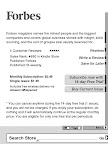
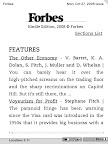
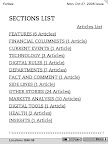
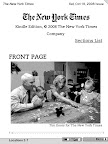
One of the things I love about the Kindle is reading newspapers, blogs, and magazines; I like to keep books on my shelf, but newspapers and magazines are pretty disposable. Reading them on the Kindle works out great; I save a tree, and the navigation on them is pretty nice. It would just be nice to have more to buy.
 |
| From Kindle |
 |
| From Kindle |
 |
| From Kindle |
Thursday, October 30, 2008
Amazon Kindle - Day Four, Other Exerimental Features
To get to the Web, you go into the Kindles experimental area; this is why I suspect they might not give free Internet in the future...it's just an experiment.
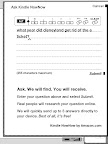
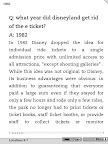
There are currently two other things in this area. NowNow and Music. NowNow works a bit like ChaCha; basically Amazon has a site called AskVille (which looks an awful lot like Yahoo! Answers); when you ask a question, it goes to a person at AskVille, who sends you three answers straight to your Kindle within about 30 minutes.
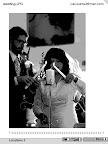
Finally, the Kindle can also be used as a photo viewer. You can either drag and drop the the picture into your Kindle, or email a JPEG to your Kindle email address, and for .10 cents it will automatically load onto the device.
There are currently two other things in this area. NowNow and Music. NowNow works a bit like ChaCha; basically Amazon has a site called AskVille (which looks an awful lot like Yahoo! Answers); when you ask a question, it goes to a person at AskVille, who sends you three answers straight to your Kindle within about 30 minutes.
 |
| From Kindle |
 |
| From Kindle |
The music area is where you go if you have loaded any MP3's onto your Kindle; unfortunately, you can't have the MP3 on your SD card and you have to randomly play the song (you also can't skip it); Amazon didn't want to make a MP3 player and it is clear; it's simply meant to be background music while you read. It's a bit of a shame they didn't make it a MP3 player on top of a reader, because the built in speakers are pretty nice.
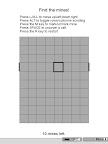
Hitting the ALT M key will bring up a Kindle version of the game Minesweeper; I don't know why this is a hidden feature, but it is.
 |
| From Kindle |
 |
| From Kindle |
Subscribe to:
Posts (Atom)


 Posts
Posts


