
Two years ago, I would have said a bold statement like "Publishing is Dead" is a little extreme. Two years later, I now rexamine that statement and question, if not dead, then is it fair to say, at the very least, that traditional publishing it's dying? I think so.
The death, or dying, of publishing is not triggered by electronic publishing, rather the lack of publishing in general figuring out what to do because of it. The best way to deal with a problem is to figure out a solution before the problem hits--that didn't happen.
Here's the problem as I see it: Publishing in general is more worried about what distributer will get them the most money than developing a model that works. They are approaching eBooks the same way they approach physical books. The biggest mistake of publishing is using yesterdays publishing model on a platform that is still defining itself. Instead of learning new platforms, they are simply opting in with little understanding of how it actually works.
I saw this as an opportunity.
I told my friend, and now business partner, Roland, that we should try and take advantage of traditional publishings present mistake--to develop a model that just might work.
In June we started setting up our model; we drafted out our first books, opened up accounts, registered the name, and did all the stuff necessary to make the business legal. We called our publishing business Minute Help Press; by the end of the month, we had our first two books. By the end of July, another dozen should join their company. Our plan is to release 5 to 10 a month.
So, in less than a month, we had two books designed, edited, and submitted to electronic distributers. The process for traditional publishing is 1 to 2 years.
The first thing we decided was that people tend to read eBooks on the go. Yes, people read it from home, but truly the best feature of eReading is the ability to have a book literally on your phone, your compuer, and your eReading device--this means wherever you are (at home, at work, or on the go) you have your book at your fingertips. The average person probably is not going t want to read "War and Peace" on their commute to work. The best eBooks are the ones you can read with a subway full of people--something that is easy to read when you are surround by distractions.
The second thing we considered is a growing number of people want to know as much as possible in the least amount of time possible. There are lots of people who are completists--they want to know every single detail about a subject. Those people are not our audience. Our audience is the business man or woman who just picked up a copy of Office 2010 and wants to know what's different about, what the basic features are, and how to use it--the people, in short, who want nothing more than a crash course on the subject.
The second thing we considered is price. We aren't paying anyone to print the books, market the books, edit the books, design the books, etc--we are doing it all ourselves. That means we can sell the books for $0.99 to $2.99 and still make a profit.
There are literally millions of people with eReaders; once people stop being stubborn and realize that eReading doesn't mean the death of physical books, that number will only grow. But as more people launch home-based publishing companies such as ours, publishing is going to take a hit--by the time they realize this, the competition might just be too great, so tomorrow's publishing companies might very well be one's just like Minute Help. In ten years, the books you see in the bookstore, might be books put out not by companies like Random House, but by two little guys with a little bit of know-how. Only time will tell.
If you want to watch the story unfold, you can join our newly launched Twitter feed here @minutehelp or see are new and future releases here: minutehelpguides.com
The first two books are currently available on Kindle; next week they should be available on the iBookstore; very soon they will be available on Nook and Google Editions. To see the current catalog of books, visit the following link. Previews of select titles are available.
Showing posts with label eBooks. Show all posts
Showing posts with label eBooks. Show all posts
Thursday, July 1, 2010


Wednesday, February 17, 2010
Free: Dispatches from a Public Librarian
I have collected the first 34 "Dispatches from a Public Librarian" along with other library-themed essays/stories in an eBook, and it's yours free if you want to read them. Just go to this link and it's yours.
If you have Stanza on your iPhone, you can also find it on Feedbooks.
If you have a Nook, you can get a free download directly onto your reader.
It is also on ManyBooks, which converts it to several other formats.
For Kindle users, a .99 version is on the Kindle Store; it is not possible, at this time, to make the book free; if Kindle changes this, I will do so.

If you have Stanza on your iPhone, you can also find it on Feedbooks.
If you have a Nook, you can get a free download directly onto your reader.
It is also on ManyBooks, which converts it to several other formats.
For Kindle users, a .99 version is on the Kindle Store; it is not possible, at this time, to make the book free; if Kindle changes this, I will do so.

Tuesday, January 19, 2010
The Future (?) of Reading
With the Apple iSlate (?) schedule to come out at the end of the month, I digitally conceived what it may look like for the future of reading. Enjoy:


Monday, January 11, 2010
The Future of Magazines
I have long said the future of eReaders isn't in books as much as magazines; yes, I do like the idea of reading ebooks, because they're convenient, but I have not entirely replaced my reading with Kindle, and I don't suspect I will in my life.
Magazines are a different story; I hate the idea of having to throw away a magazine each week; it's a waste of paper and ink. But I also hate how they look on Kindle, and the general lack of good magazine subscriptions on Kindle.
If someone comes out with an electronic solution for magazines that actually works, than I'm more than willing and ready to ditch print magazines in favor of electronic ones.
Sports Illustrated demoed their version of what a magazine should look like, and it was so amazing it made me want to subscribe despite the fact that I hate sports. Take a look at the videos below and you'll get the idea:
Popular Science also demoed their vision; it's a longer video, but equally impressive.
Magazines are a different story; I hate the idea of having to throw away a magazine each week; it's a waste of paper and ink. But I also hate how they look on Kindle, and the general lack of good magazine subscriptions on Kindle.
If someone comes out with an electronic solution for magazines that actually works, than I'm more than willing and ready to ditch print magazines in favor of electronic ones.
Sports Illustrated demoed their version of what a magazine should look like, and it was so amazing it made me want to subscribe despite the fact that I hate sports. Take a look at the videos below and you'll get the idea:
Popular Science also demoed their vision; it's a longer video, but equally impressive.
Monday, November 30, 2009
Writing in the Digital Age
I finally got around to uploading the photos from my writing presentation at the Tustin Branch library last October; you can see them below. If you missed the lecture, I converted my notes into a book that you can download on Kindle (hopefully also on Nook soon). You can read a sample or buy it here.


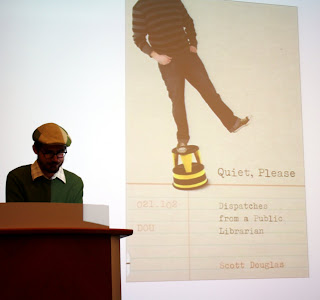


"Writing in a Digital World." Read it on Kindle now!

Why do men have Nipples?


With Chase from The Drift. Read his stuff here.
Tuesday, October 20, 2009
No Kindle Killer...Yet
I'm impressed with the new B&N Reader, the Nook, but I'm not ready to call it a Kindle killer. Here's my rationale:
*It's not international; I still like books, but eBooks are great for the road...as long as you're not going overseas where the Nook isn't available (except through wi-fi)
*Wi-Fi (on the Nook, but not the Kindle 2) is impressive, but not really neccessary when there's no built in web browser.
*There's no built in Web browswer! This is one of the places Amazon still beats them; it's so simple to be reading about a place on Kindle and look it up on Wikipedia right from the book.
*Kindle has 2 years behind it's brand--Barnes and Noble is returning to the game after completely abandoning people! I hope they don't leave again after that 300 dollar investment!
*Is lending books 14 really that impressive? And is there a limit? On Kindle you can only download a book 5 times before your blocked...it's really lame.
Honestly, I think both devices are still overpriced. I'm more excited about the Asus. But it's good to see someone new on the market to challenge Amazon.
*It's not international; I still like books, but eBooks are great for the road...as long as you're not going overseas where the Nook isn't available (except through wi-fi)
*Wi-Fi (on the Nook, but not the Kindle 2) is impressive, but not really neccessary when there's no built in web browser.
*There's no built in Web browswer! This is one of the places Amazon still beats them; it's so simple to be reading about a place on Kindle and look it up on Wikipedia right from the book.
*Kindle has 2 years behind it's brand--Barnes and Noble is returning to the game after completely abandoning people! I hope they don't leave again after that 300 dollar investment!
*Is lending books 14 really that impressive? And is there a limit? On Kindle you can only download a book 5 times before your blocked...it's really lame.
Honestly, I think both devices are still overpriced. I'm more excited about the Asus. But it's good to see someone new on the market to challenge Amazon.
Wednesday, May 6, 2009
Kindle, A Good Idea Wasted
So, if you haven't been following, there's a new Kindle coming to town. I cannot begin to even tell you how disappointed I am in this new reader. $359 is a lot of money, but the price you pay for having cutting edge technology...$489 (the price of the new Kindle DX) is complete uncalled for; especially if they are calling it the Kindle that every college student will want, because it will save them money.
They are "probably" right about the saving money thing if you account for long term; many publishers haven't put textbooks on Kindle, but that will probably change come Fall if Amazon holds up their end of the bargain. The problem, of course, is it will take between two to three years before a college student has actually "saved" money. By that time, it's very likely that the screen on the Kindle has broken, or there's something much better on the market.
Realistically, college kids don't have $500 dollars to put down on something that won't actually save them money for two to three years, and parents aren't going to see this of much of an investment because it's just too new. As far as textbook e-readers go, the rumored $200 touchscreen Android netbook seems like a better solution, because in addition to reading books, you can get applications. If I was going to blow $500 for a e-reader, I would hold out for the rumored Apple tablet, which is expected to be just a little more (and, I'm willing to bet, will be capable of running the Kindle application like the iPhone and iPod Touch).
Sure, it's nice that the Kindle can now read PDF's; and that rotating screen is a pretty nifty feature that is sure to make all your friends say "cool," but that's not enough to get me to pay over $100 more. I was actually expecting a price drop, not a price hike--I guess they just assume that if you enjoy reading then your not one of those poor saps out of work, because your smart enough to keep your job during the economic crisis?
What does the Kindle need to win me over (in five easy steps)?
First, drop the price. $200 is more realistic. I read that it cost about $190 for Amazon to make a Kindle, but the hardware isn't where their profit is--it's the books. They are making a pretty penny selling things that cost basically no money to produce, sell or ship.
Second, give it a touchscreen! You want college kids to use this like they would a textbook? Students highlight textbooks! Sure you can use the highlight/bookmark feature, but that's hardly interactive or easy to do.
Third, make the experimental features REAL! A functional Web browser shouldn't be "experimental." It should be a real, fully operational feature that sits on the home screen...not tucked away in a less visited place. The same can be said of the MP3 feature, which is really quite lousy--you can't even browse songs, for crying out loud! You'd get a better MP3 player off some street vendor.
Fourth, give it a light. I'll be honest, I tend to use my iPod Touch more than my Kindle when I'm reading in bed. How hard is it to put a little back light on it? The iPod Touch is so much more piratical for night time reading.
Fifth, again, get the price down. If they can't do this by dropping the price then find other ways. Like users get $200 if they subscribed to the NY Times or WSJ for a year or two; or initiate a Kindle loyalty program that let's Kindle first and second generation users turn in their old Kindles for an upgrade at a reduced price.
I love the idea behind Kindle--I love my first generation Kindle. I just hate the price.


They are "probably" right about the saving money thing if you account for long term; many publishers haven't put textbooks on Kindle, but that will probably change come Fall if Amazon holds up their end of the bargain. The problem, of course, is it will take between two to three years before a college student has actually "saved" money. By that time, it's very likely that the screen on the Kindle has broken, or there's something much better on the market.
Realistically, college kids don't have $500 dollars to put down on something that won't actually save them money for two to three years, and parents aren't going to see this of much of an investment because it's just too new. As far as textbook e-readers go, the rumored $200 touchscreen Android netbook seems like a better solution, because in addition to reading books, you can get applications. If I was going to blow $500 for a e-reader, I would hold out for the rumored Apple tablet, which is expected to be just a little more (and, I'm willing to bet, will be capable of running the Kindle application like the iPhone and iPod Touch).
Sure, it's nice that the Kindle can now read PDF's; and that rotating screen is a pretty nifty feature that is sure to make all your friends say "cool," but that's not enough to get me to pay over $100 more. I was actually expecting a price drop, not a price hike--I guess they just assume that if you enjoy reading then your not one of those poor saps out of work, because your smart enough to keep your job during the economic crisis?
What does the Kindle need to win me over (in five easy steps)?
First, drop the price. $200 is more realistic. I read that it cost about $190 for Amazon to make a Kindle, but the hardware isn't where their profit is--it's the books. They are making a pretty penny selling things that cost basically no money to produce, sell or ship.
Second, give it a touchscreen! You want college kids to use this like they would a textbook? Students highlight textbooks! Sure you can use the highlight/bookmark feature, but that's hardly interactive or easy to do.
Third, make the experimental features REAL! A functional Web browser shouldn't be "experimental." It should be a real, fully operational feature that sits on the home screen...not tucked away in a less visited place. The same can be said of the MP3 feature, which is really quite lousy--you can't even browse songs, for crying out loud! You'd get a better MP3 player off some street vendor.
Fourth, give it a light. I'll be honest, I tend to use my iPod Touch more than my Kindle when I'm reading in bed. How hard is it to put a little back light on it? The iPod Touch is so much more piratical for night time reading.
Fifth, again, get the price down. If they can't do this by dropping the price then find other ways. Like users get $200 if they subscribed to the NY Times or WSJ for a year or two; or initiate a Kindle loyalty program that let's Kindle first and second generation users turn in their old Kindles for an upgrade at a reduced price.
I love the idea behind Kindle--I love my first generation Kindle. I just hate the price.


Tuesday, February 17, 2009
Stealing a Book Might Help the eBook Cause
The Guardian had in interesting article on why eBooks aren’t as big as they should be; they explained that their belief (and mine too), is there aren’t enough pirates taking interest.
I’ve heard people talking about torrent sites that are plentiful of eBooks, but they are wrong. Yes, you can get a copy of Twilight…Harry Potter is there too. It’s not what’s there that surprises me—it’s what’s not. Try and find a copy of some other bestselling authors—try John Grisham…nothing. Try someone classic…chances are nothing (although admittedly the Catcher in the Rye (which is on Kindle, and won't be until Salinger is dead or suddenly has a change of heard about publishing) is pretty easy to get.
EBooks, I would think, would be the easiest thing to find because they don’t take up any space; someone could create an anonymous Google Account, post the whole darn thing to Google’s document viewer, and it would be completely untraceable if they did it right. It probably would take a publisher months before they realized someone had done it, and then sent a letter to Google for them to take it down.
What’s even more surprising to me is Kindle has been out for quite some time, but no one has created a program that converts a Kindle protected eBook into an unencrypted Word (or text) document. Without something like this, then pirating eBooks is obviously never going to be very big.
Publishers are in a truly blessed position right now, because they really don’t have to deal with piracy in the same way as the music and movie industry. I don’t think that will last, and the Guardian makes a good point—they are going to soon be awaken to a sleeping giant that they are completely unprepared to fight.
Yes there are books on torrents, but if you browse through them you’ll quickly see that they are usually non-fiction business books—some probably uploaded by the authors. Most the time if you find a way to get an eBook for free, it’s probably because it was part of a promotion. Go ahead, look; go to Mininova (one of the largest torrent sites) and browse through their recent eBook entries; wheras movie entries has stuff currently showing at your local cinema, eBooks has a bunch of porn, a few technical books (not surprising since technical books are quite popular with pirates), and that's about it.
I’m not advocating someone create software that makes pirating eBooks easier (nor am I advoccating you download books illegally--authors really do need money...they're the poorest of all artist!)—I’m just surprised it hasn’t been done yet. If you can unencrypt 60 some odd gigs of video from a blu-ray disc (which has so many layers of encryption it’s ridiculous), how hard can it be to unencrypt a book that’s not even a megabyte?
Several years ago, a friend told me that he would have no problem paying for music if there was an easy, legal, way to do it; at the time MP3 players were just catching on (it was pre-iPod), and the easiest way to get a MP3 file was to download it on Napster (or if you were a true pirate, Usenet). How long is it going to be until Kindles and eBook readers (or even cell phones as eBooks) do catch on, and people start saying, “I’d buy that eBook legally if I could.” The sad thing about my friend was he was so used to doing it illegally that now that there is an easy legal way of doing it, he still doesn't bother--he did it so long the guilt was removed, I guess!
Amazon proudly boasts that almost every single bestseller is available on Kindle; that’s nice. What would be nicer is if they could boast the same about their backlist. I would guess that 50% of the 240,000 some odd books that’s on Kindle is public domain fiction that can be gotten free anywhere else. Not in that group of 240,000 are way too many other books? Is it so hard to put Flannery O’Connor on Kindle? How about Thomas Pynchon? David Foster Wallace? Heck what about Harry Potter? If Kindles so big they can’t get Harry Potter? And how about Michael Crichton? Thanks for giving us a Kindle version of The Lost World (sequel to Jurassic Park), but where’s Jurassic Park? Why don’t only put on the last Harry Potter while you’re at it?
Right now people can’t go easily on the Net and illegally get books from most of their favorite authors, but every month that changes more and more. The digital revolution that publishers have so far avoided, has finally come—let’s hope they start to get prepared.
Friday, February 13, 2009
The Google eBook?
There's been a lot of talk about eBooks on phones lately; the problem many people have with this idea is phones were meant for talking, not reading, and unless you want eye strain it just won't happen.
This might change if Moto Labs has anything to do with it. They are experimenting with putting the Android OS on eReaders. Maybe nothing will come of it, but it's an interesting possibility.
This might change if Moto Labs has anything to do with it. They are experimenting with putting the Android OS on eReaders. Maybe nothing will come of it, but it's an interesting possibility.
Tuesday, January 13, 2009
Windows 7 Book Already on Kindle
Less than a week ago, Microsoft released Windows 7 beta to the general public, and a publisher has already posted an eBook for Kindle (a somewhat short one, I’m sure). This kind of thing is exactly what Kindle is all about.
Kindle isn’t the death of books; I think Kindle is the rebirth of things like pamphlets, and, to a lesser extent, short stories (which, sadly, have almost vanished from most magazines, and exist only in journals). Physical books on Windows 7 probably won’t come out until a few months before Windows 7 retail launch, but Kindle makes it possible to get stuff like this out much earlier.
I think the thing Amazon should be investing more money in is getting well known authors to post original material on Kindle; it doesn’t have to be anything like a book. A simple essay or short story would work just fine; something that shows the world that authors are just as eager to experiment with Kindle as publishers are.
Wednesday, December 10, 2008
Books on Nintendo DS
Apparently iPhones aren't the only place we might see books in the future. Nintendo might soon be testing it out on their handheld devide, the Nintendo DS. The first test will cost 30 books and contain 100 classic works.
Monday, December 8, 2008
Is iTunes the New Kindle?
A new story is out saying Apple may consider putting books on iTunes; I'd hardly consider this a story—I'd consider it a fact. The technology is there, and people are already putting books on their iPod touch and iPhones; I predict a new touch will come out sometime next year (followed soon after by a new iPhone) that has better resolution that can handle books.
Publisher's are struggling to figure out how to make profit in a digital age; I've been saying for years that they'd soon have to go through what the music industry went through several years ago with MP3's, and I think the time has arrived.
Two things are on my mind, however. One is what format Apple would use; one can only hope they don't use their own; and two, what will happen to the authors? Musicians simply learned to tour if they wanted to make money, but what about authors? Maybe Stephanie Meyer can sellout the Nokia, but the average author can't even get a handful of people to show up for a signing at Barnes & Noble. What happens when people start putting books up on bit torrent and publishers go from making $50,000 to $100,000 on a mid-list author to making less than $10,000—my guess is they cut back the number of authors they sign, which is already low.
My longstanding idea for putting advertisements in an eBook might start looking like a better idea to them. And FYI, here are the two blogs I've mentioned advertising in the past:
http://speakquietly.blogspot.com/2007/12/future-of-books.html
http://speakquietly.blogspot.com/2008/06/welcome-to-wonderful-world-of-free.html
Friday, October 31, 2008
Amazon Kindle - Day Five, Getting the Most Out of Kindle
The Kindle can read Word documents, which is nice, but what is nicer is you can email those Word documents to your Kindle for .10 cents.
You can also publish a book on Kindle in a matter of minutes. As an experiment, I put a number of my writings (some never published) in Kindle format, then uploaded them to be published. Now anyone with a Kindle can buy it for .99 cents; I was going to make it .01, but .99 is the minimum for some reason. I think you make .35 cents for every dollar sold. You can't check them out here:
It's almost silly to buy books on the Kindle when there are literally thousands of classics in public domain. I've been downloading a lot from FeedBooks.com and ManyBooks.net. These books look just as nice as the ones you pay for.
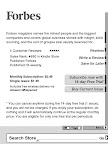
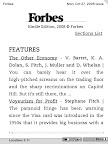
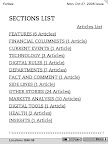
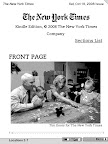
One of the things I love about the Kindle is reading newspapers, blogs, and magazines; I like to keep books on my shelf, but newspapers and magazines are pretty disposable. Reading them on the Kindle works out great; I save a tree, and the navigation on them is pretty nice. It would just be nice to have more to buy.
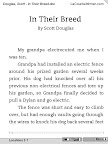 |
| From Kindle |
 |
| From Kindle |
 |
| From Kindle |
Thursday, October 30, 2008
Amazon Kindle - Day Four, Other Exerimental Features
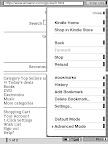
To get to the Web, you go into the Kindles experimental area; this is why I suspect they might not give free Internet in the future...it's just an experiment.
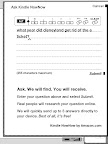
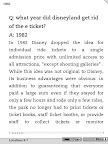
There are currently two other things in this area. NowNow and Music. NowNow works a bit like ChaCha; basically Amazon has a site called AskVille (which looks an awful lot like Yahoo! Answers); when you ask a question, it goes to a person at AskVille, who sends you three answers straight to your Kindle within about 30 minutes.
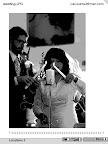
Finally, the Kindle can also be used as a photo viewer. You can either drag and drop the the picture into your Kindle, or email a JPEG to your Kindle email address, and for .10 cents it will automatically load onto the device.
There are currently two other things in this area. NowNow and Music. NowNow works a bit like ChaCha; basically Amazon has a site called AskVille (which looks an awful lot like Yahoo! Answers); when you ask a question, it goes to a person at AskVille, who sends you three answers straight to your Kindle within about 30 minutes.
 |
| From Kindle |
 |
| From Kindle |
The music area is where you go if you have loaded any MP3's onto your Kindle; unfortunately, you can't have the MP3 on your SD card and you have to randomly play the song (you also can't skip it); Amazon didn't want to make a MP3 player and it is clear; it's simply meant to be background music while you read. It's a bit of a shame they didn't make it a MP3 player on top of a reader, because the built in speakers are pretty nice.
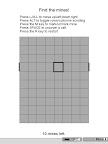
Hitting the ALT M key will bring up a Kindle version of the game Minesweeper; I don't know why this is a hidden feature, but it is.
 |
| From Kindle |
 |
| From Kindle |
Wednesday, October 29, 2008
Amazon Kindle - Day Three, The Web
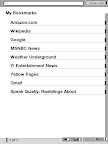
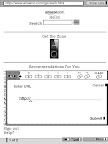
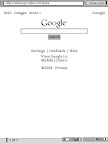
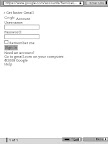
The biggest surprise about the Kindle is it has free Internet access; I don't know if they'll continue doing this, but I sure hope they do. Basically, it uses the Sprint network to surf the net--so anywhere Sprint is, you have the Internet. The downside of this is it drains the battery, but, when your not using the Web, you can simply turn it off.
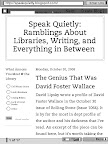
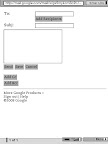
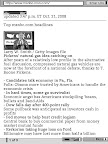
It's not exactly 3G Internet, but for the price I'm paying I didn't think it would be. It's a bit like surfing the Net using a dial-up modem; so it's not ideal for seeing graphics, but it's great for blogs and checking and sending email!
If you are familiar at all with using the Web on your cell phone, then you should not be surprised by how it looks--like a mobile version of the Internet. You don't get YouTube, but you get the news...so I guess you just have to read about the funny video.
I'm all about free; I hate the idea of buying a data plan for my phone, and now I don't have to. I have my Gmail account set to forward all my incoming email to text message...if the email is urgent, now I have a way of replying while I'm on the road. If I bought a data plan, I'd be spending $360 dollars a year...that basically pays the cost of the Kindle!
Hitting the ALT key and the number 1 will launch Google Maps; supposedly you are supposed to see your position, so it's kind of like GPS (except it has no GPS inside...I think it's using the cellular signal?); unfortunately, I only saw this work once. I'd like to see this feature work better, because hitting the ALT 2 and ALT 3 keys will show you gas stations and eateries nearby you.
 |
| From Kindle |
 |
| From Kindle |
 |
| From Kindle |
 |
| From Kindle |
 |
| From Kindle |
 |
| From Kindle |
 |
| From Kindle |
 |
| From Kindle |
Tuesday, October 28, 2008
Amazon Kindle - Day Two, Reading a Book
After about 30 seconds of reading a book on the Kindle, you forget you are even reading a book on a digital device.
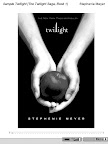
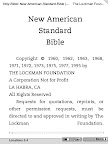
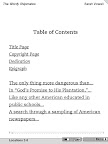
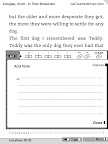
The first book I bought was the Bible; it helped me get over the guilt of spending nearly 400 dollars on a eReader! I expected this to take awhile, but, surprisingly, it download just as quick as any other book (30 seconds are less is pretty normal). Obviously, this is one book where navigation is important; with a simple click (no matter where you are) you can go to the Table of Contents page; here you can select the book, and then chapter you are looking for. All books work the same way. This is nice for most books...others, such as Sarah Vowell's The Wordy Shipmates, it's a little confusing, because her book doesn't have chapters; you can see in the image below how this becomes difficult, but not impossible, to find your place. Luckily, whenever you stop reading, it automatically remembers where you were in every single book.
Another nice thing about the Kindle is you can erase your books to save space, and then re download them at a later time; unlike basically all MP3 stores, which make you buy the song again if you delete it, Amazon keeps a copy of it online for you.
 |
| From Kindle |
 |
| From Kindle |
 |
| From Kindle |
The built in dictionary is a bit sluggish, but easy to get to. Whenever you are stuck on a word and want to know what it means, simply click the scroll, click look up, and the Kindle looks up every single word on the line you have pointed at; it takes about 10 to 20 seconds to return the results; it still beats digging up your dictionary to find the definition.
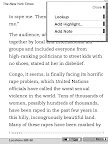

You also have the ability to highlight and take notes on a particular passage; I haven't played around with this much, but I imagine it would be great for college students who have put textbooks on their Kindles. Typing on the Kindle has a bit of a delay, which I don't mind too much; it would bug me if I was using it to type a term paper, but when all your doing is typing in web pages and book titles, you hardly even notice.
 |
| From Kindle |
Monday, October 27, 2008
Amazon Kindle - Day One, Out of the Box
I'm going to spend the next week giving an overview of basically every Kindle feature. I think at the right price it will be in the hands of every book reader (or even Web reader) in the very near feature. If you hate the idea of eBooks, then just ignore me. If not, then read on.
Today, I'll go over the overall look and feel of the device; over the next couple days, I'll show you what the free Internet looks like (yes, free), and some of the other less talked about features.
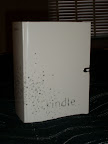
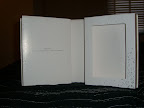
The first thing that really struck me about the device was the box; you can tell a lot from a gadget by the amount of time spent in packaging. The box is basically shaped like a book (creative, right!); I put my box on my bookshelf.
 |
| From Kindle |
 |
| From Kindle |
When I turned the Kindle on for the first time, it look fake--I didn't think words could ever be so clear on something. It's just like words in a book. When I took it outside there was absolutely no glare.
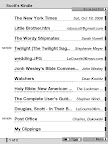
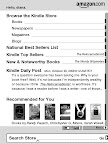
The first thing you see when you turn on the device is the main menu. On this menu you can sort books by title, author, or most recently read/added. You can also choose to show only magazines, newspapers or books. When you stick a 4 gig card into the Kindle, and load it with thousands of books, this main screen becomes problematic...it would be nice to have the option of hiding some of the books; otherwise you'll spend twenty minutes hitting next page to get to the book you want.
What really separates the Kindle from Sony's reader is the ability to download books without a computer. In less then a minute, you can go to the store, pick the book, and have it downloaded onto your device. And there's a huge amount of books already available (unfortunately, there's not many magazines). You also have the option of previewing as many books as you can fit; the previews usually contain about 20 to 50 pages, which is enough to help you know if the book is worth reading.
 |
| From Kindle |
 |
| From Kindle |
 |
| From Kindle |
Thursday, July 17, 2008
Want Kindle 2.0 for Christmas?
If your hoping for a new Kindle for Christmas, you may be in luck. There's a new rumor out that says Amazon is preparing to launch two new Kindles (one in October and one a little later in the year or possibly 2009).
The new Kindle will alledgedly be smaller, cheaper, and prettier then the first generation one. Insiders say they are trying to target a younger audience.
I'll keep my fingers crossed that it addresses the flaws of the first generation models.
The new Kindle will alledgedly be smaller, cheaper, and prettier then the first generation one. Insiders say they are trying to target a younger audience.
I'll keep my fingers crossed that it addresses the flaws of the first generation models.
Wednesday, June 25, 2008
The Wiki Book Project
I don't like the word Web 2.0. Some of you already know this. It's gimmicky, and really nothing more then rhetoric used by snobby lecturers at conferences no one wants to be at--for some reason these people believe the word can best be describe with a PowerPoint Presentation that is pretty, but makes no sense.
There is one good thing about the word. It's got people talking about the idea of Wiki. I believe Wiki is what the Web was made for--it brings a diverse group of people together to create something collaboratively that can be used to help the masses.
I read recently about a new Bible translation going on as a Wiki project. Only time will tell if the project is a success; I find it hard to believe that something like the Bible can be translated by scholars and amateurs alike and not have serious bias and debates arise. Regardless of the outcome, it's a fascinating experiment.
The idea of teamwork has never been so exciting! It's no longer about working closely with people you work with; it's about working closely with people you have never once meant!
One of the reasons I posted "The Library Tree" not just as an electronic book, but as a Wiki book was because I was curious to see how many people take it seriously, how many people take it as fun, and how many people try to vandalize the effort people are making. In reality I think it takes all three for such an experiment to work.
There needs to be people on a Wiki project who is all about order and structure; someone who just wants to be silly and have fun; and someone all about making waves.
So whoever you are, take those creative energies and put them to use...
There is one good thing about the word. It's got people talking about the idea of Wiki. I believe Wiki is what the Web was made for--it brings a diverse group of people together to create something collaboratively that can be used to help the masses.
I read recently about a new Bible translation going on as a Wiki project. Only time will tell if the project is a success; I find it hard to believe that something like the Bible can be translated by scholars and amateurs alike and not have serious bias and debates arise. Regardless of the outcome, it's a fascinating experiment.
The idea of teamwork has never been so exciting! It's no longer about working closely with people you work with; it's about working closely with people you have never once meant!
One of the reasons I posted "The Library Tree" not just as an electronic book, but as a Wiki book was because I was curious to see how many people take it seriously, how many people take it as fun, and how many people try to vandalize the effort people are making. In reality I think it takes all three for such an experiment to work.
There needs to be people on a Wiki project who is all about order and structure; someone who just wants to be silly and have fun; and someone all about making waves.
So whoever you are, take those creative energies and put them to use...
Tuesday, June 24, 2008
Welcome to the Wonderful World of Free
I had toyed for several years about making some of my writing free; I liked the idea, but obviously not the price! I believe what convinced me was finally concluding that readers should be rewarded.
Society is rapidly changing because of the Internet; the music industry is realizing this; the film industry is realizing this; and I believe the publishing industry will learn this very soon. Because so few books are digital, the publishing industry has been slow to feel the sting. Piracy, so far, has not been a big issue. If digital books catch on, they're going to have a rude awakening.
Sometimes I wonder if very soon publishers will go away entirely; instead of selling a book to a publisher, the writer will solicit it to a publicist, and if they like it they'll take the writer on, send the book to Amazon, and then use their muscle to try and promote it. If the books a success, then some independent press will pick it up, and print it for all the people who still want a bound book for their bookshelf.
A lot of people would be outraged by this; I'd be one of them. If I enjoy the book, I like having it bound and on display in my library. But home libraries are, sadly, are becoming more iconoclastic. People have larger DVD and CD libraries than book ones.
If you like "The Library Tree" then feel free to buy a copy on my website; or simplely keep it on your harddrive; I'm not making much of a profit with this project, so I really don't care what you do. Whatever way you read it, I hope you enjoy it and tell a friend.
Society is rapidly changing because of the Internet; the music industry is realizing this; the film industry is realizing this; and I believe the publishing industry will learn this very soon. Because so few books are digital, the publishing industry has been slow to feel the sting. Piracy, so far, has not been a big issue. If digital books catch on, they're going to have a rude awakening.
Sometimes I wonder if very soon publishers will go away entirely; instead of selling a book to a publisher, the writer will solicit it to a publicist, and if they like it they'll take the writer on, send the book to Amazon, and then use their muscle to try and promote it. If the books a success, then some independent press will pick it up, and print it for all the people who still want a bound book for their bookshelf.
A lot of people would be outraged by this; I'd be one of them. If I enjoy the book, I like having it bound and on display in my library. But home libraries are, sadly, are becoming more iconoclastic. People have larger DVD and CD libraries than book ones.
If you like "The Library Tree" then feel free to buy a copy on my website; or simplely keep it on your harddrive; I'm not making much of a profit with this project, so I really don't care what you do. Whatever way you read it, I hope you enjoy it and tell a friend.
Subscribe to:
Posts (Atom)


 Posts
Posts


